

DIGITAL DETOX
Skincare For the Digital Age
More Than Meets the Screen: In today’s digital age, technology has transformed how we work, communicate, and unwind. But it has also changed the environment in which our skin spends much of its day. Understanding these less-visible influences can help us develop thoughtful skincare habits for an increasingly digital world. When we think about screens and skin, blue light may be the first concern that comes to mind. Yet the relationship between digital life and our skin is more complex.
We know that too much screen time can interrupt sleep patterns, strain the eyes, and leave us feeling mentally fatigued. But what about our skin? From hours spent looking down at devices to late-night scrolling, indoor environments, and the everyday pressure of being constantly connected, our digital habits may influence our skin in ways we rarely consider.
The Pressure of Always Being Connected.
Living in a state of constant digital connection takes a toll. The endless scrolling, information overload, and social comparison mean our brains rarely get to switch off. For many of us, that internal digital stress quickly shows up on the outside, manifesting as sudden skin changes, how the skin looks and feels, particularly for people already prone to sensitivity or breakouts.
Blue Light: What Do We Really Know?
In our collective digital era, prolonged exposure to screens has become a daily reality, even a necessity at times, and with it comes the challenge of protecting skin from the harmful effects of blue light.
1. Blue light can disrupt the circadian rhythm of skin cells, which is essential for the repair and regeneration processes that occur overnight. This means that even if an individual is diligent about using sunscreen during the day, inadequate repair at night can still lead to cumulative damage.
2. Blue light, emitted by smartphones, computers, and other digital devices, can contribute to premature skin aging and skin damage by accelerating oxidative stress and weakening the skin barrier.

3. Blue light penetrates deeper into the skin compared to other forms of visible light. Unlike the broad spectrum of natural daylight, screen light is an isolated, artificial source focused directly near your skin in darkened indoor environments.
4. Clinical evidence suggests that blue light exposure can result in up to a 20% increase in skin roughness and a 15% reduction in skin hydration levels over time. This process not only affects visual appearance but also impairs the skin’s ability to retain moisture and defend against external stressors.
5. Blue light accelerates skin aging by increasing free radical production, which damages collagen and elastin fibers. As these structural proteins degrade, skin begins to show signs of aging such as fine lines, wrinkles, and loss of firmness.
6. Although the body possesses an elegant defense system to prevent radical damage, this innate system can be overwhelmed and lead to a state of oxidative stress.
Sunlight v. Blue Light
Screen Time = Less Time Outside. Though sunlight remains a much stronger source of visible light than a typical screen, the difference is that, among other concerns, sunlight provides vitamin D.
While Vitamin D is famous for building strong bones, its influence extends much further into our daily well-being. Emerging research suggests that maintaining optimal Vitamin D levels is associated with several vital bodily functions. It helps support the body's natural defense mechanisms, is involved in pathways that help the body manage energy levels and uplifts our spirits.
Now the good news - Skincare to the rescue!
The good news is that we can supplement our skin’s hydration and help against free radicals with topical antioxidants, including vitamin C and E, in our skincare products.
A study, published in Journal of Cosmetic Dermatology (2019), observed significant changes in skin texture and hydration levels in individuals with high digital device usage using topical skincare products, confirming that mitigating blue light exposure through enhanced skincare protocols can be effective for long-term skin condition.
Aromatherapy: Your tool for a digital reset.
Pleasant aromas can draw our attention away from the screen and into the present moment, offering an opportunity to pause, breathe, and reflect. Scent encourages us to slow down and apply products more intentionally rather than rushing through the routine while checking a phone.

For an easy refresher, keep an aromatic spritz near your computer or workstation such as Prickly Pear, Turquoise Sage, or Rose hydrosol, for hydration, rejuvenating, antioxidant.

Essential oils can introduce a new dimension to self-care. Rather than to a device, aromatherapy beckons us to our own senses, our surroundings, and our true ourselves. The interplay of texture, touch, and scent coaxes us into the present moment, encouraging us to slow down. A thoughtful beauty ritual offers a rare moment of respite by engaging our senses where scent elevates an ordinary skincare routine into a luxurious, sensorial experience.
Of course, aromatic skincare alone cannot erase the effects of long hours spent online, but it can be a tool for well-being and can help us create restoring rituals around it. The simple act of cleansing the face, applying a beautifully scented facial oil or moisturizer, or sensing a pleasing aroma can become a signal that the digital day is coming to an end.
Sinking Into a Digital Sunset

Your skin’s natural reset button:
By trading late-night scrolling for a relaxing bedtime routine, you give your skin the uninterrupted time it needs to repair, refresh, and build collagen. In fact, studies show that practicing good bedtime habits is a simple, proven way to help your skin look visibly refreshed and naturally resilient.

Make your own “Digital Sunset” blend:
Turning our attention toward a nighttime routine of skincare, aroma, and quiet reflection, we create
space between the activity of the day and the stillness of night.
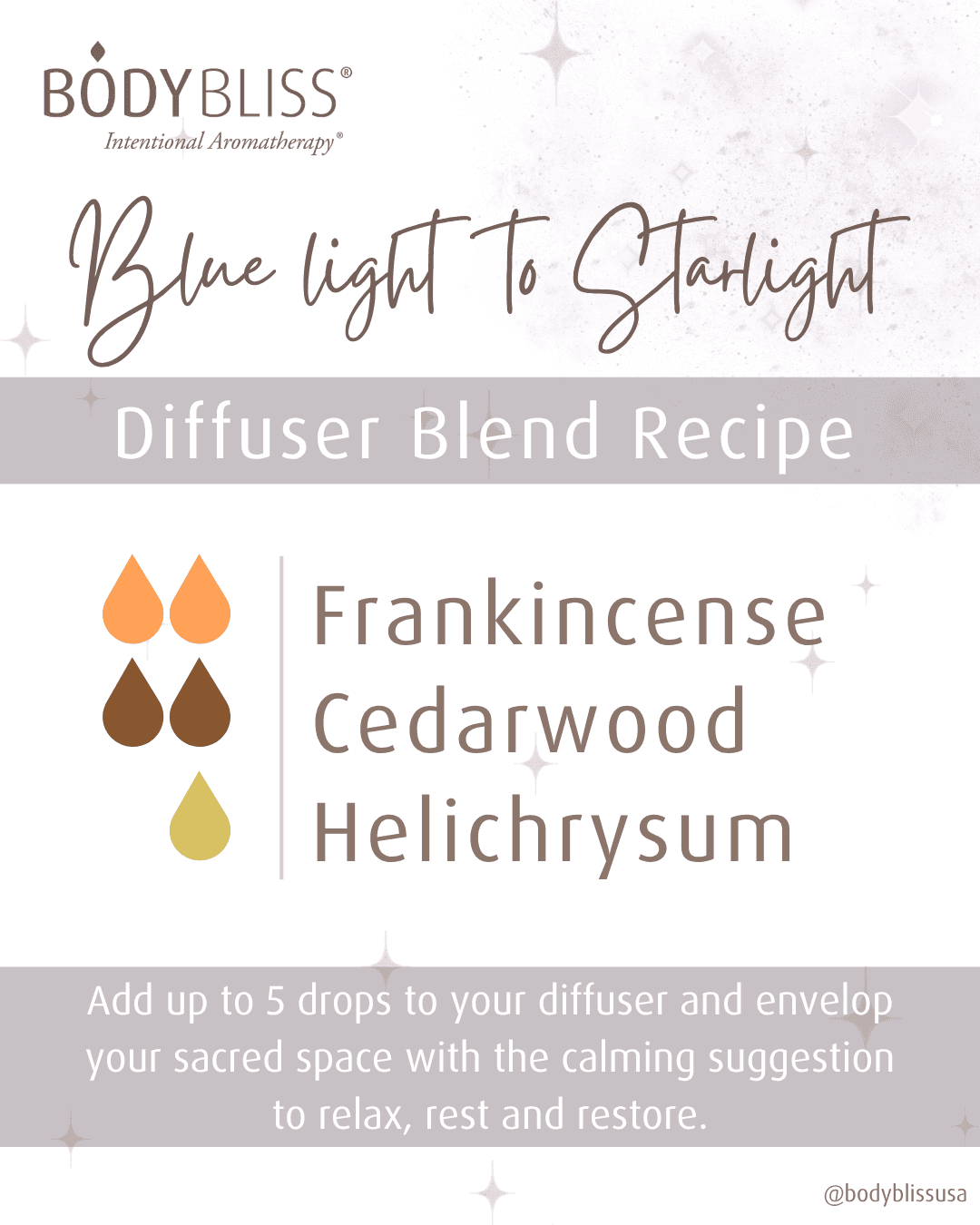
From Blue Light to Starlight:
2 drops Frankincense: Useful for mature and/or dry skin. As the "King of Essential Oils" it is highly valued in skincare for its powerful rejuvenating and protective properties.
2 drops Cedarwood: Offers a warm, grounding base with antioxidant properties to help target redness and soothe the skin barrier.
1 drop Helichrysum: A powerful skincare ally that stimulates skin cells (fibroblasts) to increase collagen and elastin production, accelerating recovery from environmental damage.
An Aromatic Canopy of Quiet:
2 drops Roman Chamomile: Highly prized for its ability to soothe sensitive or reactive skin types while easing worry.
2 drops Lavender: Well-known for its antioxidant properties to combat environmental damage, supporting skin cell turnover, and calming mental clutter before sleep.
1 drop Sandalwood: Delivers deep hydration to skin layers and provides antioxidant qualities, while anchoring the blend with a peaceful, grounding aroma.

Where the Screen Ends and Relaxation Begins:

A digital sunset is not a rejection of the modern world. Rather, it is a gentle bowing to the natural one, dimming the blue light so your inner light can begin its innate renewal. It is the moment we allow the glowing screens to fade, inviting the quiet luxury of evening rituals to take their place. As the scents and the sensations of skincare restore your skin, let your mind drift into the stillness. In turning off the noise, we find space to reconnect with the rhythm of our own well-being, waking up not just refreshed, but deeply renewed from the inside out, greeted with youthful-looking, glowing skin.
For when we allow the night its proper quiet, we give both our spirits and our skin the space to reset, to glow, and to beautifully renew.
[1] Kumari J, Das K, Babaei M, Rokni GR, Goldust M. The impact of blue light and digital screens on the skin. J Cosmet Dermatol. 2023 Apr;22(4):1185-1190. doi: 10.1111/jocd.15576. Epub 2023 Jan 3. PMID: 36594795.
[2]Bogdan Allemann I, Baumann L. Antioxidants used in skin care formulations. Skin Therapy Lett. 2008 Sep;13(7):5-9. PMID: 18839043.
[3] Jour Lassie, Naima 2025/12/30 102 111 T1 - The Relationship Between Blue Light Exposure from Digital Devices and