
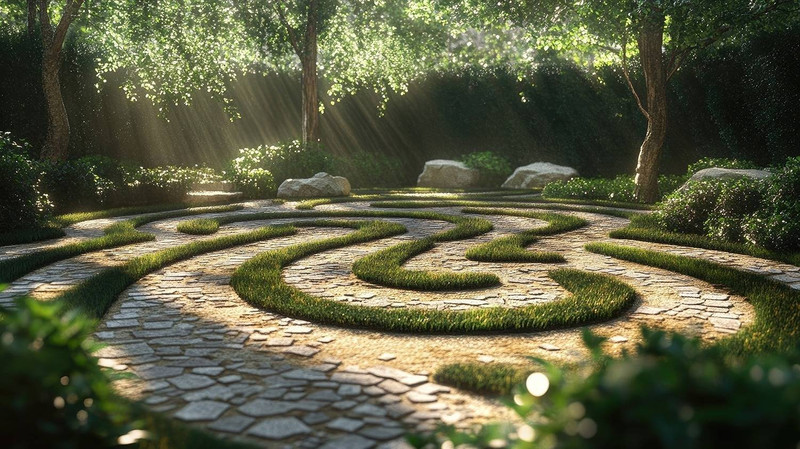
Sacred Space
Create Your Own Personal SACRED SPACE with Aromatherapy
“[Sacred space] creates a link between the conscious and the unconscious mind, allowing a chain of events to come forth. It expands the space between thoughts- the space that leads to the oneness of the universe.”
Valerie Ann Worwood, Fragrant Heavens
Have you ever experienced a place, a sacred space, that instantly settles your spirit, calms your mind, and soothes your soul? Perhaps it is a peaceful garden, a quiet corner of your home, or a place in nature where the noise of the world fades away and a sense of calm naturally arises. In our hectic, fast-paced, and often stress-filled lives, these moments of stillness can feel rare and precious.
When a space is intentionally set apart for reflection, meditation, or spiritual practice, the mind begins to associate that environment with calm, meaning, and inner focus. Over time, simply entering that space can shift our awareness, inviting us to slow down, breathe more deeply, and reconnect with ourselves.
AN ANCIENT PRACTICE
Sacred spaces have existed in cultures all over the world for millennia. Some of the oldest sacred spaces are over 10,000 years old, including ancient stone circles (henges) and ceremonial sites. Their existence shows that humans have valued sacred places since the earliest civilizations.
One of the oldest known sacred sites discovered so far is Göbekli Tepe, dating back approximately 11,500–12,000 years. This makes it nearly 6,000 years older than the Egyptian pyramids and thousands of years older than Stonehenge. A more recent discovery, Karahan Tepe, may be even older. What has surprised many scientists is that these sites were built by prehistoric communities, revealing a level of organization and sophistication far beyond what was once believed possible for that time.

Across time and cultures, sacred spaces consistently appear and are greatly revered. Even societies that developed independently created temples, shrines, meditation areas, or sacred natural sites. This deeply entrenched pattern suggests that the idea of sacred space is universal to humanity, perhaps reflecting a profound human need to create places where the physical world and the spiritual experience meet.
In fact, there is a term for this powerful urge to be surrounded by and immersed in nature. “Biophilia” is the innate human tendency to seek connections with nature and other forms of life, popularized by biologist Edward O. Wilson as a genetic, evolutionary affinity for the natural world.” Psychology Today
Side Note: The word biophilia originates from the Greek, ‘philia’ meaning ‘love of’. It literally means a love of life or living things. Humans have a deeply engrained love of nature which is an intuitive and natural drive imprinted into our DNA. Researchers believe this to be a reason that we have thrived as a species, helping us to locate the most fertile land, cultivate food and nurture new life. We have a physiological need to be in contact with nature and the natural world.
SACRED SPACES ARE MORE IMPORTANT NOW THAN EVER BEFORE
Being enveloped by natural elements is widely associated with much needed calm, reflection, and openness. This is one reason nature-inspired elements such as scent and sound are intentionally incorporated into spa environments. Aromatherapy offers a refined and intentional way to translate the essence of nature into designed environments through scent.

In a world that moves quickly and constantly demands our attention, creating a sacred space supported by scent can become a powerful ritual. Lighting a candle, diffusing essential oils, or applying a grounding blend before meditation can signal to the mind and body that it is time to slow down and reconnect.
CREATE YOUR SACRED SPACE
Scent, in particular, offers a simple way to bring the essence of nature into your space through aromatherapy. The space begins to feel more alive, connected, and restorative.

A small corner with a candle, plant, and journal can become a sacred space where you meditate or reflect daily. Over time, just sitting there can make you feel calmer and more centered. Creating a sacred space in your home offers a quiet refuge where you can reconnect with yourself, slow your breath, and restore a sense of balance.
Imagine stepping into a quiet corner of your home where the air carries the gentle scent of frankincense, sandalwood, or lavender. The lighting is soft, your mind begins to quiet, and the tension of the day slowly melts away. This is the power of sacred space. Creating a sacred space in your own home, especially with the help of aromatherapy, can be a simple yet powerful way to invite calm, clarity, and intention into daily life.
Here are more ways to help create a calming, spiritual, and intentional atmosphere.
1. Candle
A candle represents light, clarity, and spiritual presence. Lighting it when you enter your sacred space can signal the start of meditation, prayer, or reflection. Use white, unscented candles. White candles symbolize purity and spiritual connection, often used to cleanse energy or initiate new beginnings.
2. Crystals or Stones
Many people use crystals for grounding or energy.
Examples include:
- Amethyst for peace
- Rose quartz for love
- Clear quartz for clarity


3. Plants or Flowers
Living plants symbolize growth, life, and renewal. Even a small plant can bring natural calm and positive energy to your space. Flowers (and flower essential oils) are thought to be especially good to invite the angelic realm.
4. Journal and Pen
Writing down thoughts, prayers, intentions, or gratitude can deepen your connection to your sacred space.
5. Essential Oils
For thousands of years, cultures across the world have used scent, especially aromatic oils and resins, to transform ordinary spaces into places of reflection, introspection, and spiritual connection. Today, we can draw from that ancient wisdom to create our own sacred spaces, using the powerful language of aromatherapy to calm the mind, open the heart, and invite a deeper sense of peace.
Aromatherapy provides us with a sacred space. Sacred spaces are places of refuge, quiet retreats for renewal, sanctuaries for our senses. They can be places where we can escape the pressures of the day [and] cultivate a sense of spiritual renewal, harmony, and balance. Essential oils can evoke powerful emotions, awaken long lost memories, arouse feelings of our favorite sacred spaces, and reconnect us with the sacredness found in nature. Salvatore Battaglia
5a. Frankincense aka Olibanum - Sometimes referred to as “The King of Oils,” it has been used for thousands of years in temples and ceremonies, even in modern churches and sanctuaries. Clears stagnant energy. Said to hold the “wisdom of the ages.”
5b. Myrrh - Traditionally used alongside frankincense in ancient rituals to support deep contemplation, reverence, and spiritual reflection. Known as the Archetype of the “Wounded Healer,” Myrrh helps us let go and move forward.

5c. Sandalwood – Used for thousands of years in spiritual practices in India and Asia to create peace, calm and contact with the Divine.
5d. Lavender – Known as one of the best oils for relaxation and balance, Lavender carries the comforting, nurturing energy of the Mother. Great for sacred spaces used for rest, reflection, or journaling.
5e. Cedarwood – Grounding and stabilizing, the oil is often used to support meditation and mindfulness. Native Americans have used it for spiritual purification rituals. Its warm, forest-like scent connects people with nature, offering the strength and balance of the woodland.
5f. White Sage - Most commonly used as smudge smoke, but the oil is also used to symbolically clear negative energies. Note that white sage and clary sage are very different oils with different properties.
5g. Palo Santo - Meaning “holy wood” or “sacred stick” in Spanish. Native to South America, it has been traditionally used in smudging rituals to promote positivity. Unlike white sage, which is typically used to clear away negative energy, Palo Santo is believed to bring in positive, uplifting energy and good fortune.

5h. Rose - One of the highest-vibration oils in aromatherapy. For all matters of the heart, rose brings her spiritual energies for love, compassion and forgiveness.

5i. Cinnamon - In ancient times, cinnamon was extremely rare and expensive. It traveled long distances through trade routes from Asia and Arabia to the Middle East and Mediterranean. In traditional and ritual practices, cinnamon was used to purify sacred environments. Symbolically, many traditions linked cinnamon’s warm and stimulating scent with vitality, life force, and sacred offerings.
6. A Comfortable Cushion or Mat - If you plan to meditate, pray, or sit quietly, a cushion or yoga mat helps create a comfortable place for stillness.
7. Personal Symbols or Spiritual Objects These could include:
Religious symbols, statues, talismans, etc.
8. A Small Bowl or Offering Dish - Some people place items such as water, flowers, stones, fresh fruit or notes of gratitude in a bowl as a symbol of offering or appreciation.
ANCIENT SACRED BLENDS
The ancient Egyptian “Temple Blend” is often associated with a famous sacred incense called Kyphi (Kapet). It was used in temples over 3,500 years ago during spiritual ceremonies and evening rituals and was considered a sacred preparation that calmed the mind, purified the temple, and helped people enter a meditative or dreamlike state.
A Simple Modern Sacred-Space Version
You could recreate a simplified version in a diffuser:
- 2 drops Frankincense
- 1 drop Myrrh
- 1 drop Cedarwood
- 1 drop Cinnamon
AN ANOINTING OIL
The Holy Anointing Oil described in ancient Hebrew texts (in the Book of Exodus 30:22–25) was a sacred blend used in the Tabernacle and later in the Temple. It was used to consecrate priests, sacred objects, and holy spaces, essentially setting them apart for spiritual purposes.
A Modern Sacred-Space Inspired Blend Inspired by the ancient formula, a gentle modern version could be:
- 1 drop Frankincense (often added today)
- 2 drops Myrrh
- 1 drop Cinnamon
- 1 drop Rose
Blend the above drops in a small glass container with jojoba oil. Place your fingertip(s) in the oil blend then, with intent and reverence, place them at your heart chakra and/or third eye (above and between the eyebrows – be careful to keep away from the eyes). Breathe deep the holy scent and feel it raise your vibration to the heavens.


